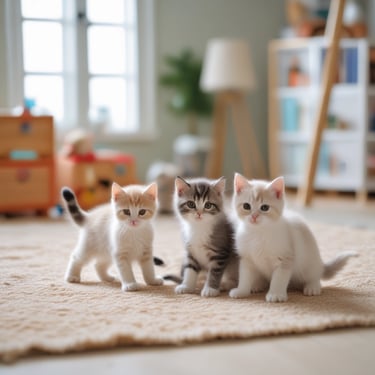
How to Keep Indoor Cats Happy, Active, and Stress-Free (Complete Guide)
Quick Answer
Indoor cats stay happy, active, and stress-free when their environment consistently supports natural feline behaviors like hunting, climbing, scratching, exploring, and resting. This means structured feeding, daily interactive play, vertical territory, proper litter box setup, and ongoing mental stimulation. When these needs are met, most common issues—like constant hunger, destructive behavior, anxiety, and nighttime activity—significantly improve or disappear.
Jump to What Your Cat Needs Right Now
Use this quick navigation to go directly to the area your cat may be struggling with:
Why Indoor Cats Develop Behavior Problems
Indoor cat behavior problems are almost always environmental—not personality-based.
Cats are biologically wired to:
Hunt multiple times per day
Control territory (especially vertical space)
Follow predictable routines
Alternate between short activity bursts and deep rest
When these instincts are not supported, cats don’t simply “adapt.”
They redirect their behavior.
This is why you see:
Constant meowing → unmet needs or stimulation gaps
“Always hungry” behavior → broken feeding cycle
Scratching furniture → missing territory outlets
Night zoomies → unused energy
👉 Related CLJ pages :
Cat Behavior Problems & Solutions
Why Is My Cat Always Hungry?
The 7-Part Indoor Cat Lifestyle System
This system is built around replacing what indoor life removes.
Instead of trying to “fix behavior,” you fix the environment.
1. Feeding Structure (Stops Constant Hunger + Food Obsession)
Cats are natural hunters—not free grazers.
Free feeding disrupts their biological rhythm and often leads to:
Constant begging
Food obsession
Weight gain
Energy spikes at night
A structured feeding system should include:
2–3 scheduled meals per day
High-protein food for better satiety
Slower feeding methods to mimic hunting effort
👉 Helpful feeding tools:
👉 See these informative pages:
Why this works:
Structured feeding restores the natural cycle: hunt → eat → groom → sleep.
2. Daily Play (Prevents Destructive and Aggressive Behavior)
Play is how cats release hunting energy.
Without it, that energy gets redirected into:
Scratching furniture
Biting or swatting
Knocking objects over
A proper play routine includes:
2 daily sessions (5–15 minutes each)
Wand toys that mimic prey movement
A reward at the end (food or treat)
👉 Go here for fun cat toys:
Playful cat wands
👉 See these helpful pages:
Why this works:
Play completes the hunting cycle and reduces excess energy buildup.
3. Vertical Space
(Builds Confidence and Reduces Stress)
Cats experience territory in three dimensions—not just floor space.
Without vertical options, cats may:
Feel insecure
Hide frequently
Become territorial or reactive
Develop anxiety-related behaviors
Provide these to make your cat feel secure:
Cat trees
Window perches
Elevated resting spots
👉 See these cat trees and perches:
Cat Trees
Cat Perches
👉 More information available here:
Cat Anxiety Remedies, Triggers and Solutions
Why this works:
Height provides safety and control, which are essential for stress reduction.
4. Scratching Zones
(Protects Furniture + Supports Natural Behavior)
Scratching is essential—not optional.
It allows cats to:
Mark territory
Stretch muscles
Maintain claw health
Release stress
If you don’t provide proper options, they will scratch the furniture.
Fix it by:
Offering multiple scratching surfaces
Placing them near sleep and activity zones
Providing both vertical and horizontal options
👉 Highly recommended cat scratchers:
Durable cat scratchers
Cardboard cat scratchers
👉 See this helpful page:
Cat Behavior Problems & Solutions
Why this works:
Placement matters as much as the scratcher itself.
5. Rest Zones (Stabilizes Mood and Prevents Overstimulation)
Cats require uninterrupted rest to regulate stress and behavior.
Without proper rest areas, you may see:
Irritability
Hiding in inconvenient spaces
Overreactive behavior
Provide:
Quiet sleeping zones
Elevated resting spots
Enclosed or semi-hidden areas
👉 Internal links:
Why New Cats Hide (And When to Worry)
Cat Anxiety Remedies, Triggers and Solutions
👉 Optional tools:
https://www.amazon.com/s?k=cat+bed&tag=catloversjunc-20
https://www.amazon.com/s?k=cat+cave+bed&tag=catloversjunc-20
Why this works:
Cats need control over their environment—including when to disengage.
6. Litter Box Setup
(Prevents Major Behavior Problems)
Litter box issues are almost always caused by setup problems—not defiance.
Common mistakes include:
Too few boxes
Small or enclosed boxes
Poor placement
Inconsistent cleaning
A proper setup includes:
One box per cat, plus one extra
Large, open litter boxes
Quiet, accessible locations
Daily scooping
👉 See these highly rated litter boxes:
Large litter boxes
Odor control litter boxes
See this helpful page:
Why this works:
Cats avoid discomfort. If the box feels wrong, they will avoid it.
7. Mental Stimulation (Eliminates Boredom at the Source)
Indoor cats often suffer from under-stimulation.
Without enough mental engagement, they may:
Seek constant attention
Develop destructive habits
Overeat out of boredom
Show signs of anxiety
Add to their environment:
Puzzle feeders
Toy rotation
Window stimulation
Treat-based scavenger hunts
👉 Very helpful tools:
Why this works:
Mental engagement replaces boredom-driven behaviors.
👉 See this helpful page:
Signs Your Indoor Cat
Is Not Getting What It Needs
These are not random behaviors—they are feedback signals:
Constant hunger
Night zoomies
Scratching furniture
Excessive meowing
Hiding
Overgrooming
Litter box issues
👉 See these helpful pages:
Fix It Fast (High-Impact Plan)
If you want immediate improvement, start here:
Add 2 daily play sessions
Switch to structured feeding
Add one vertical space
Place 2–3 scratching options
Introduce one enrichment tool
Most owners begin to see improvements within a few days.
🧠 Why Indoor Cats Don’t Need More Space
(Final Takeaway)
Quick Answer:
Indoor cats don’t need more space—they need a better-designed environment.
When routine, movement, territory, and stimulation are properly structured, most indoor cat behavior problems improve or disappear.
The Real Fix Most Cat Owners Miss
Most indoor cat issues—like constant hunger, zoomies at night, scratching, or attention-seeking—are not personality problems.
They are environment problems.
Cats are naturally driven to hunt, climb, control territory, and rest in secure spaces.
When those needs aren’t met, frustration builds—and behavior problems follow.
The 4 Things That Actually Fix Behavior
Routine → Creates stability and reduces anxiety
Movement → Burns energy and prevents restlessness
Territory → Builds confidence through vertical space
Stimulation → Prevents boredom and destructive habits
What This Means for Your Cat
When these four areas are consistently supported, you’re not just managing behavior—you’re removing the cause.
Most “bad” behaviors improve or disappear because:
energy is released properly
stress is reduced
natural instincts are fulfilled
👉 A well-designed environment doesn’t just control behavior—it prevents bad behavior.
FAQ
How do I keep my indoor cat happy?
Provide structured feeding, daily play, vertical space, scratching areas, and mental stimulation.
Why is my indoor cat always hungry?
Most cases are caused by boredom or poor feeding structure—not true hunger.
Do indoor cats need enrichment?
Yes. Without enrichment, they develop boredom-related behavior problems.
Are indoor cats healthier?
They are generally safer, but only thrive when their environment is properly structured.
Continue exploring Cat Lovers Junction:
Sharing our love and knowledge about cats.
© 2025. All rights reserved.
Contact us at info@catloversjunction.com
As an Amazon Associate, I earn from qualifying purchases